I have spent a lot of my time standing in lines—airports, grocery stores, border crossings, government offices. I don’t usually remember them. They blur together. I remember this one because nothing about it was dramatic, yet still my body reacted as if something were at stake.
The security line at the Philadelphia airport moved slowly, but not unusually so. Shoes off. Bags open. Laptops out. The same instructions in the same calm voices. People obeyed without complaint. I stood holding my passport, already open, already ready, feeling the familiar tightness in my chest—the sense that something small and administrative was about to judge me.
Waiting does this to me. My mind scans for errors—something forgotten, something wrong, something that might explain why I don’t belong where I’m trying to go. In lines I become acutely aware of my body: how I stand, where my hands are, whether I look competent or tired or suspicious. Everyone else seems fine. Everyone knows the steps.
I watch the people ahead of me. A man fumbles with his belt, apologizing to no one. A woman snaps at her partner for putting the wrong bag in the bin. A child refuses to let go of a stuffed animal, gripping it as if the scanner might swallow it. The line pauses, resumes, pauses again. No one is angry. No one is relaxed. We cooperate because we have to.
Lines pretend to be neutral. First come, first served. Clear rules. Equal treatment. But they never feel neutral from the inside. There is always the sense that something inevitable is being measured—not just what you carry, but who you are. Whether you look like trouble. Whether you know the choreography well enough to slow things down.
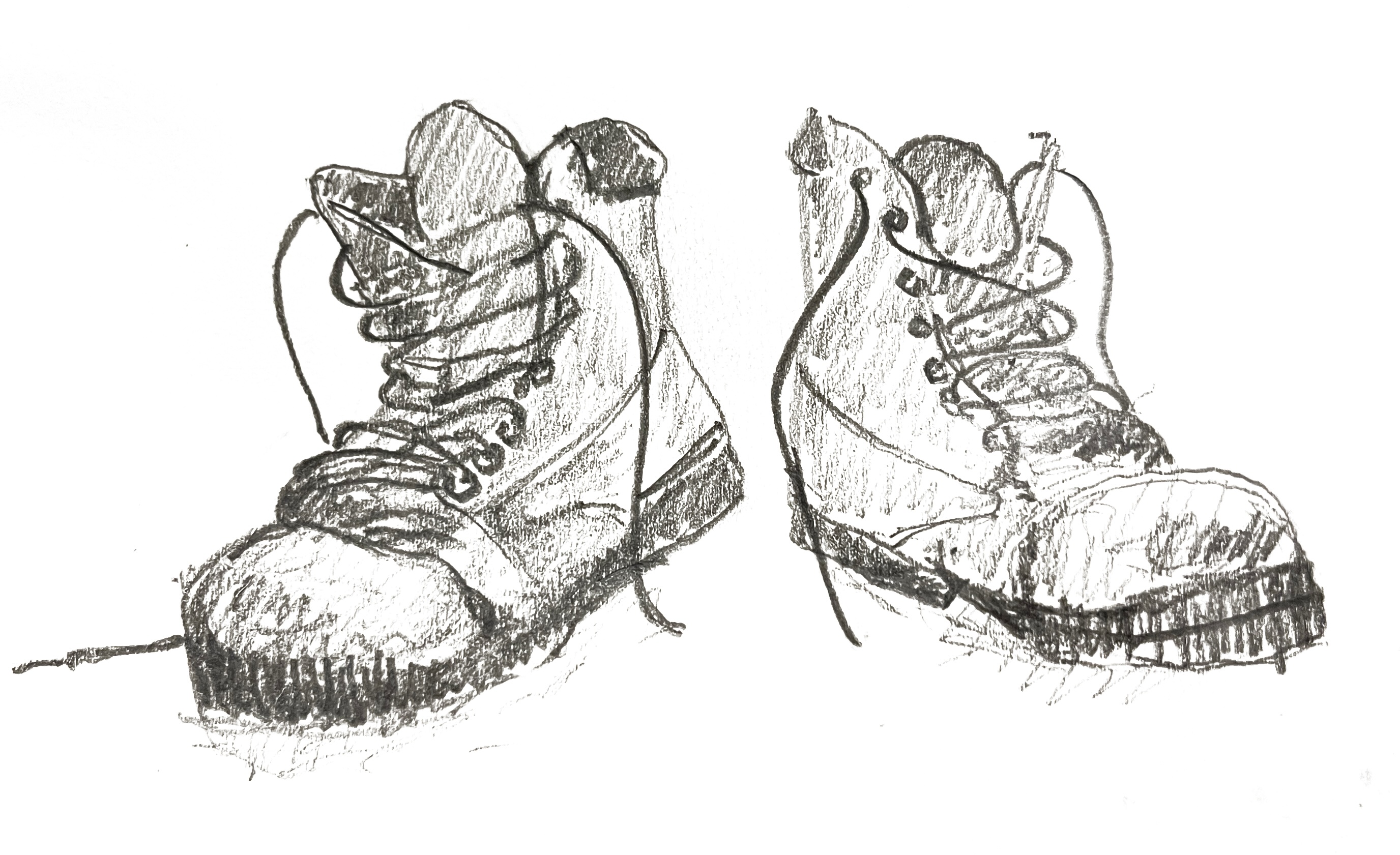
I tell myself I’ve done this countless times. I know the rules. I am prepared. Still, when it’s my turn to step forward, my heart speeds up. I place my shoes in the bin, unzip my bag, slide my laptop out like an offering. I hate how compliant I feel. I hate how relieved I am to be told exactly what to do.
The officers barely look at me. That should be reassuring, but it isn’t. Being overlooked feels as precarious as being singled out. I step into the scanner, raise my arms, hold still. For a moment, everything stops. No forward movement. No backward movement. Just waiting to be cleared.
While I stand there, I think about lines I’ve crossed without marking them. Lines I didn’t know were lines until after. The line between staying and leaving. Between saying yes and saying no. Between being careful and being quiet. Lines rarely announce themselves. They make sense only once you’re on the other side.
A child a few people ahead of me turns around while waiting. She looks at the machine like it might do something interesting if she watches closely. She waves at it. Her mother laughs softly and pulls her forward. The moment is small, almost nothing, but it stays with me. The child isn’t afraid yet. She hasn’t learned what the line is for.
When it’s over, when I’ve waved through, relief hits hard enough to feel embarrassing. Nothing happened. Of course nothing happened. Still, my body acts like it has survived something. I put my shoes back on, repack my bag, and move toward the line without stopping to think.
That’s how it goes. One line clears you for the next. Boarding. Seating. Arrival. Customs. Each one a quiet test of patience and obedience. Each one a reminder that movement is conditional, that access is granted, not assumed. Even when everything goes smoothly, the process leaves a mark—a crease you carry forward.
Later, on the plane, I watch people buckle themselves in, slide bags under seats, follow more instructions without comment. The cabin fills with the soft sounds of compliance—clicks, zips, fabric shifting. No one looks distressed. No one looks relieved. We are simply doing what comes next.
I think about how much of adult life is arranged this way. How often movement depends on permission. How easily the body learns the choreography long before the mind considers what it is agreeing to.
Lines are supposed to be fair. Clear rules. But standing in that airport, I felt how thin the difference is between order and control. How quickly neutrality becomes judgment. How easily the body remembers past crossings, even when the mind insists there is nothing to fear.
I don’t remember boarding the plane. I don’t remember the flight. I remember standing in that line, passport open, already offering proof that I deserved to move forward. I remember how my body tightened before anything went wrong. How relief arrived before safety did.
That is what the line taught me—not patience, not fear, but how waiting reveals what we have learned to accept quietly, and how much of ourselves we are willing to place on the belt just to be waved through.