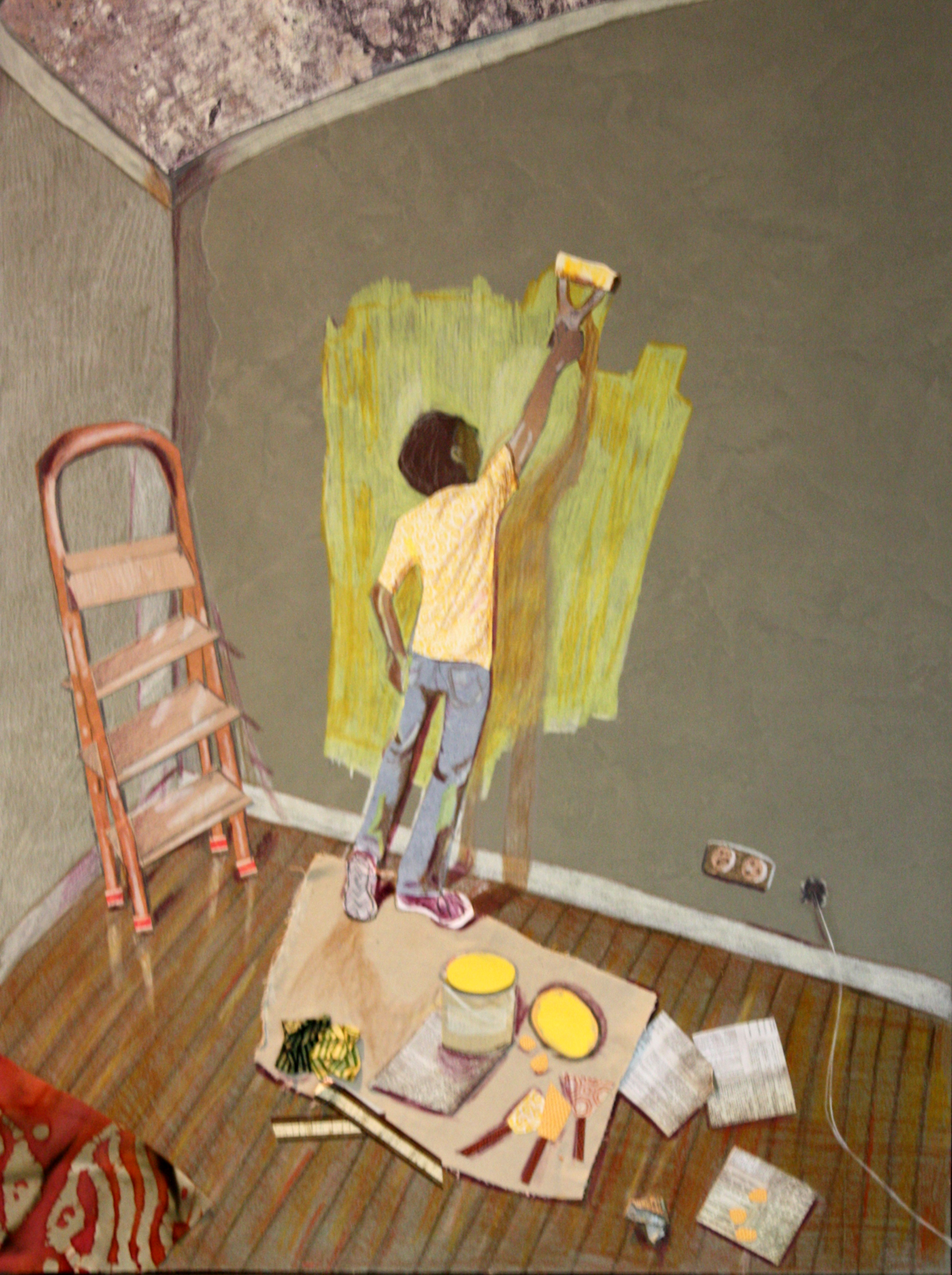
Sugar Sand
My sixth-grade science teacher has us studying mollusks in little plastic cups half-filled with sand. I am pigeon-toed and tingly at the thought of touching something from the sea for the first time. While the teacher explains how the mussel's “foot” pulls it across the ocean floor, I run my fingertip along its purplish shell, looking for its face, careful about the expression I'm making. I want the mussel to know I'm friendly, that I can be trusted.
At the end of the day, my teacher says to return the mussels if we don't want them. My classmates put their cups on the counter and sling their backpacks over their shoulders. I stare down through the blurry water. I ask to go to the office.
My parents are at work, so I phone my grandmother, who is boiling maple sap on the stove, the last of the steam sweetening the kitchen. When she says my name, I hear my grandfather in the background. He shifts away from his news program and asks what's wrong.
“I have an animal,” I say, and something catches in my throat when my grandmother asks for details. All I can tell her is that I need her to come get me so I can save it.
I hear my grandfather say, “It better not be a high-class rat.”
She asks what would have happened if I'd given the animal back. I actually don't know. I picture the mussel being tossed into the icy bay of the local grocery store's seafood counter.
The air in the car is sugary and warm. During the ride, I clutch the cup in my palms. The mussel sits in the bottom like a smooth stone.
My grandmother tells me to look in the back pocket of the passenger seat. A small jar filled with brown powder is tucked there.
I ask if she overcooked the maple syrup. She says yes, but on purpose, and she added some cream, and I'll like it.
Later, I trot down to the communal lake behind my parents' house, with the cup in one hand and the jar in the other. I kick off my sandals and step onto our dock's hot, red planks. I look at the mussel, unsure whether it can survive in fresh water, whether something's waiting to eat it.
I set the cup and the jar on the dock's edge. I remove the rubber band and lace doily from the jar, put them aside, and scoop a fingertip-full of the crumbly maple sand. When I sprinkle it into my open mouth, its sweetness dissolves on my tongue.
I'd planned on dumping the mussel into the lake and then watching Punk Rock Chicks from Outer Space until my mom got home, but now, I am soaring over the water with the cup gripped to my chest, and then my feet break through the surface, then the rest of me follows, and my hair fans out, and as I rush to the bottom, the sand and the mussel burst free from the cup.
The mussel floats, then settles, and I want to stay, but I'm being pulled to the top. I plant my soles in the lake-bottom muck, and I take root. A school of yellow bullheads whirls under my raised arms. The mussel opens. I hear my own laugh, feel my hair expand into a beautiful mane, become aware of my eyelashes, my skin, the splashes of color painted all over me. Under the water, I bloom.
Sprig o' Parsley, Sprig o' Mint
My high school is dripping in pink and white paper hearts, and Millie stands near her locker, wearing a glittery, blood-colored dress. I've worn the same skirt every day for the past week. It's been a year since anyone has called me a “boy.”
As I pass, squished in a cloud of peers, Millie says to someone, “I have no flowers in my hand. Why don't I have fucking flowers in my hand?”
After class, I take my new driver's license on a trip to my grandparents' house, ensconced between emerald hedges two blocks from a noisy overpass. My grandmother is cross-legged on a hemlock stump in the yard, blowing a tune on a tin whistle.
“I played this one the day you were born,” she says as I unlock the garden gate, as if continuing a conversation we've been having all day.
My grandfather is near the hedge with his hands on his hips, looking over black five-gallon buckets spilling with plants. I remember him showing me his hot peppers when I was a child, his crowning achievement.
Those are too hot to eat, he told me.
Then why grow them? I asked.
Because they're good, he said.
I tell my grandparents I need a bouquet for someone. Besides the occasional dandelion, though, there's no color in this garden. Everything that grows here is for nourishment, not show. My grandmother looks at me as if I should have known this, but she sees the desperation welling in my eyes.
“Here,” my grandfather says. He grunts as he bends at the waist and reaches into the mass of green. My grandmother puts the whistle back to her lips, and flits out the final notes of “Follow Me up to Carlow.”
When my grandfather turns around, his hands are caked in soil, and he's clutching a clump of different green things from the garden: stringy, leafy plants that shoot the smell of dish soap up my nose.
“Take it,” he says. “And tell her these are worth more than carnations.”
I wiggle out of my skirt, put on black pants and a jacket, and drive to Millie's parents' house. I stop on the side of the road to snatch a white flower I don't recognize, and I poke it into the center of the garden bouquet. When I ring Millie's doorbell, I notice the crescents of dirt etched in the fringes of my fingernails. Two does and a fawn chomp on fat purple heads of trillium at the edge of the yard, watching me, the stranger.
Millie answers the door, in bare feet and the same glittery dress from school. Her black hair reminds me of an oil slick.
“Oh. Hey.”
I extend my hand, full of plants from my grandparents' garden.
On the way over, I'd thought of what to say: These are yours; Be mine; I hate Valentine's Day but I love you. But my mouth is gravel. I look at her eyes and try not to seem terrified.
For a moment, she's trying to figure out what's happening. Then she understands, and takes the bouquet. The stems are tied in blue wrapping.
“I feel like no one even saw me today,” she says. She pulls me into a hug, and the brief beating of her chest against mine, the transfer of heat, feels like something out of myth.
We walk through the woods with arms locked, following the deer trail. I show her wood sorrel, and we giggle at its lemony taste in our mouths. When we see the deer again, they glare at us from behind a cluster of mock orange.
“My dad always makes me scare them away,” Millie says.
I pull my grandmother's tin whistle from my sleeve, and hand it to Millie.
“Nobody wants to be scared,” I say.
She looks at the whistle, unsure whether she wants to take it. When she does, she screeches a made-up tune that the deer notice, but don’t run from. When it’s my turn, I do the same, plugging random holes with my fingertips. But the deer don’t know we’re playing badly, do they?
Once we’re done laughing, Millie turns to me, and her face changes.
“Alright,” she says, leaning in. “This is only happening once, ever.”
When she kisses me, I open my mouth and accept what she gives.
Dieu-le-Veut's Reel
Two of my friends get married the week after I begin having dreams of a pirate girl on the high seas. In these dreams, I see through the girl's eyes, feel the warm blood left on her fingers after battles with privateers, taste the salt whipping off the blue swells, but I don't think she's me, exactly. When my friends call to ask if I'll help them hang a thousand threads of origami cranes from the ceiling of the venue and set tiny ships in bottles in the center of every table, I want to go back to sleep.
When I do, we (the pirate girl and I) are gripping the wheel of a vessel on its way from Tortuga to the heart of the ocean. The creak of the hull, the way the wind tosses my hair, the burning of the salt in my nostrils – it's as raw as anything that happens when I'm awake.
I awaken with sweat beading my clavicle like a shimmering necklace. I fish around on the nightstand for my phone, and call my grandmother.
“Grandma, were there woman pirates?”
I thought I may have woken her up, but I can practically hear her hands rubbing together, as if she's been waiting for me to ask.
“All the ones that matter,” she says. “Rusila, Sayyida al Hurra, Grace O'Malley, Ching Shih, Mary Read, Anne Dieu-le-Veut. And these weren't your ho-hum drunken sailors. These were queens. Empresses. Women who escaped terrible lives and took what was theirs.”
I latch onto the last one, Anne Dieu-le-Veut, a name I like the sound of. When I dream of the pirate girl again, I tell myself that this is who we are – this French lady buccaneer – gnawing dried meat and licking salt from stained fingers, mending sails with blistered hands, dreaming dreams-within-dreams about moonlit lovemaking on shores we'll only visit once.
I think about calling my grandmother again, just to talk, not to ask her for something. But I only think about it.
The night before the wedding, I cinch into my dress, soft orange chiffon, and attempt to get laid, but no one in my address book has the energy – at least, no one in the coastal tourist village where the wedding will be. I drink half a bottle of wine while still in my dress, lying on my hotel comforter and tapping a high-heeled foot to a tune I can't remember the name of. I decide on nine different colors for my nails, then I don't paint them.
Soon, I'm walking to the beach with wine-breath and a foggy head, a nose full of the sea-smell that takes me back to stacking plastic sandcastle molds as a child, to poking dry jellyfish with my big toe. Never mind that it's actually the smell of decay.
I follow the tapping of a hand drum to a little marina on the ocean. Women in identical orange dresses stand in an oval, swiveling to the thud of a bodhran and a tambourine. The sand is cool now, and soon I'm among them, spinning and weaving, skin tingling, eyes filled with torchlight, the hairs on my arms electric. I shimmy into the center, and each woman moves in opposite me one by one. Some of them are ropy and young, hungry to keep this energy alive. Others have starfish necklaces, skin stippled with seashells, or threads of neon eelgrass in place of hair. One woman moves to the center, locks eyes, knocks our hips together, and tinders a thousand fires in me. When we finish, she returns to the outer circle, rubs her heel, and heads to the docks, vanishing as other women close the gap in bodies. The drumming picks up.
But I'm not tired yet. The next woman enters the circle, and as she whips the purple sea sponges issuing from her scalp, I see the face of my grandmother, what she looked like when she was only a few years older than me. Only now she's not grimacing in a black-and-white photo from a seemingly impossible time period. Now, she's fully animated, grinning, long-limbed and straight-backed, a burst of color.
We giggle, match each other step for step, and I think to myself that we are now at the point we could never get before: adults who can see each other as the fullest versions of ourselves.
“Grandma –”
She shakes her head. Maybe we don't need to talk.
Finally, my knees wobble, and I can feel my pulse in the soles of my feet. Time to sit. My grandmother nods. She understands, but she won't be done for a while.
When I find the woman I danced with before, she's sitting at the end of a dock, legs hanging over the side. The drumming is muffled behind us.
I sit next to her, dip my feet in the ocean, and feel something calling me from below, like whalesong vibrating my bones.
“I heard that the ocean would make me feel small,” she says, staring over the horizon.
I say, “Pirates probably came up with that idea. They didn't always know where they were going.”
She thinks it over, allows a hint of a smile. “By the way,” she says, “who are you, anyway?”
So many ways to answer, all so incomplete.