When I lived in New Zealand, I didn’t go a day without a friendly stranger asking where I was from. My accent gave away that this wasn’t home for me. It became part of my coffee order, my rides on the bus, every “good morning” on a sidewalk.
I would explain myself by degree: I was from America, I was from the East Coast of America, I was from the Northeast in America, I was from near New York, I was from Boston, I was from Plymouth County and a town called Marshfield.
“Like the Pilgrims?”
“Yes,” I would say, surprised and somehow embarrassed.
New Zealand unmoored me; my anxiety reached a fever pitch, and I worried about anything and everything. I felt estranged from my beloved Atlantic, the ocean of my hometown. Nightmares of Pacific tsunamis left me weeping in my sterile little flat. There was a jar of raspberry jam I’d bought – the idea of eating jam and butter on nice bread a hopeful mirage towards intuitive wellness – that sat open and uneaten in my fridge for nearly two months before I threw it out. I had convinced myself that the seeds would lodge in the lining of my throat and kill me.
When I felt homesick, it was my childhood bedroom, my mother in the backyard, my father’s dusty bookshelf that I missed. I distracted myself from the uncomfortable present by planning for the cool blue summer that stretched out before me. I decided that being home – the word taking on a new, broader definition, one that could encompass the entire country – was enough for me to be able to conquer the penetrating fear that dictated my life in New Zealand.
My plans fell haphazardly into place, and I moved to Maine. I was living with my grandmother – a plump and fidgety British woman with wire-rimmed glasses and enough striped sweaters to adorn a small, prim army – in the house my mother grew up in. My grandmother was from England but had lived in Hong Kong, South Africa, and Malaysia as a child. She married a Welsh scientist in London in her early twenties, had two children, and moved to America so he could pursue cancer research at a prominent lab. The lab was on an island that was mostly undeveloped – a vacation spot in the summer but with a very small year-round community. The four of them moved into a single-level house on a densely forested road across from a muddy pond. The crafty Welsh scientist, over twenty years, constructed a second floor, a two-car garage, and extravagant front and back decks with white banisters. By the time I moved in for the summer, houses studded the woods in every direction. The woods I’d mapped in my mind as a kid became someone’s guest bathroom, someone’s tomato garden.
The island itself had transformed since my mother’s childhood. The scattered tourists of her youth had amalgamated into schedules of cruise ships and $4 hourly street parking on the east side of the island. Nearly two and a half million tourists visited in 2024. The huge influx of visitors led to an unbelievable rise in rental properties. No one could find a place to live on minimum wage – a measly $14.65 – so at four PM, summer workers endured standstill traffic coming off the island, back to housing erected specifically for them, who had no option but to commute the fifteen miles. Even the lab – which provided the means for my family to come here forty years ago – resorted to satellite housing: hideous gray cubes next to a strip mall along the highway. I wrote a few cover letters and mentioned that I had a place to stay, and jobs tumbled into my lap.
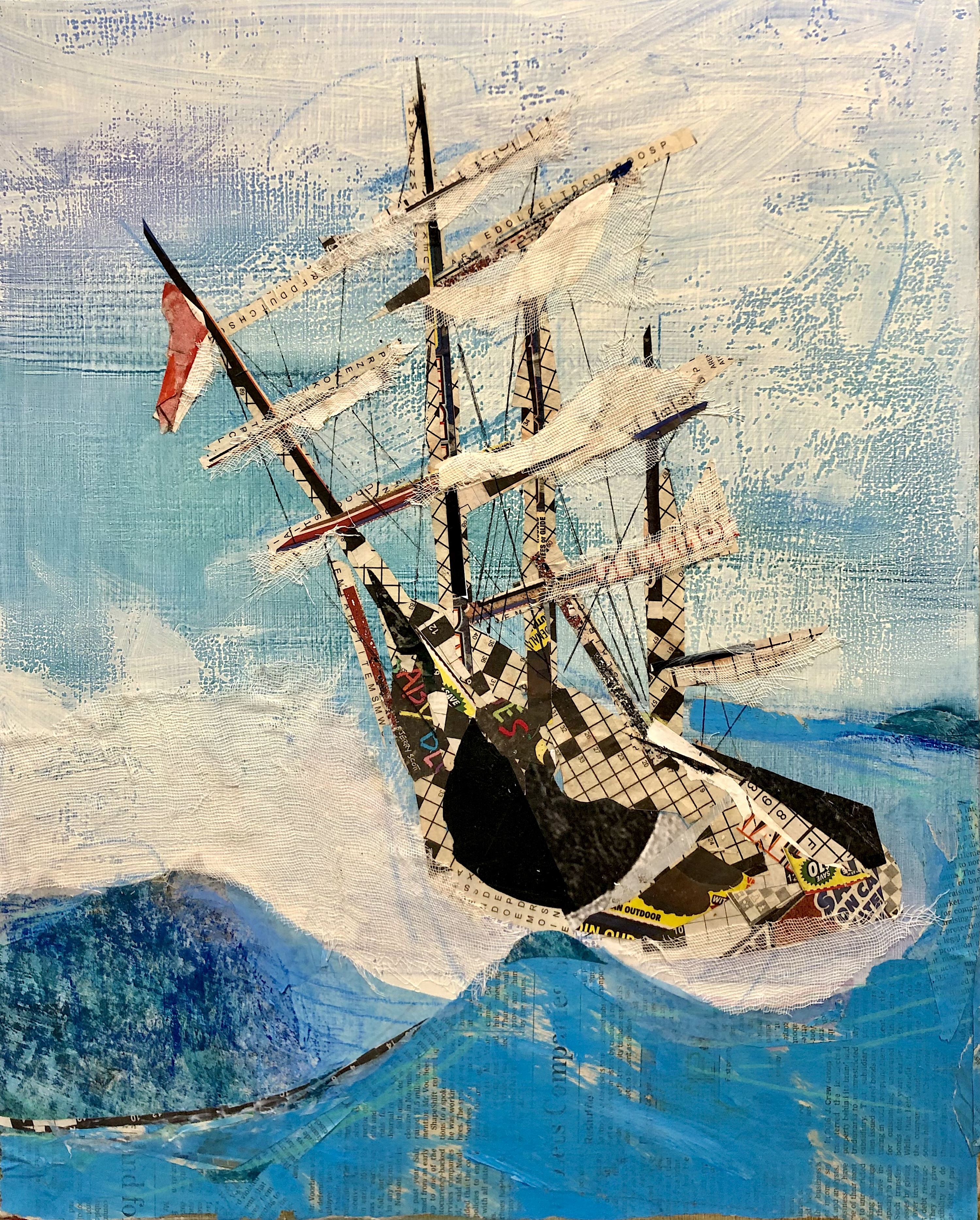
Thirteen days after I moved out of my flat in New Zealand, I was standing on a dock grinning and helping Midwesterners into the cockpit of a lobstering sailboat from 1899 – Alice E. I worked three-hour tours of up to six passengers, pouring white wine into tumblers and telling local histories like I’d lived there forever. I developed eggplant bruises from eleven-hour days perched on the toerail offering fun facts about lobsters and the island. (“And if you look over that hill, that’s Martha Stewart’s house!”)
The transition from living ten thousand miles from America to living in my mother’s childhood home was jarring, but not unpleasant. While abroad, I had missed the toothy smiles and grocery-store eye contact which Americans are unaware that they’re so fond of. The familiar landscape as well as my proximity to my beloved Atlantic was a balm to my anxiety.
To get through eleven hours of customer service, I had gradually developed an alter ego: Affable Sailor Girl was friendly but not overbearing, curious but not invasive. (One day, my grandmother came sailing and commented on how different I seemed at work: “You were so funny!”) This not only kept me from becoming nervous, it required less thinking than being myself and helped the hours go by. Once I’d hauled up the hundred and fifty pounds of cedar boom and gaff and we were properly sailing, it was easy enough to get people to talk at length about themselves. I often felt like a magician, pulling silk handkerchief after silk handkerchief from the sleeves of my passengers, hearing endless stories about first visits to the island (all the way from Michigan, wow!) and the logistics of running a dairy farm in South Dakota (I can’t imagine it’s easy to get away from that this time of year!).
If I was faced with particularly cagey passengers who frowned, tight-lipped, behind their Ray-Bans, I could always ask them the question I had so dreaded in New Zealand. Affable Sailor Girl would chirp, “So, where are you folks from?” followed, inevitably, with, “Have you been to the island before?” And the rest was easy. Like clockwork, these passengers launched into telling me not just where they lived, but where they came from, why they moved.
Young couples would, without fail, say they had just moved to New York for work but are really from just outside of Boston and [Town in Virginia]. Families were from the Midwest and had come to the island a few times in the last five years. Old ladies had never been here, old men had been every summer since they were this high, can you believe it? Anyone who booked a private tour had recently retired to Connecticut but used to live in [Mid-sized City]. One middle-aged lady from North Carolina but living in Delaware told me about how when she goes to North Carolina for the holidays, everyone tells her it must be so nice to be home. She laughed and said she only lived there until she was eighteen and it really wasn’t home anymore, but people Down South are funny about the word ‘home’.
Without fail, every passenger wanted to know if I was from the island. “Are you local?” they’d sigh, already imagining my barefoot childhood dotted with blueberry patches, rocky cliffs, and a sea-grizzled lobstering father. I took a hint of pleasure in shattering this illusion with a recitation of my ancestry.
“People around here are really picky about who gets to be ‘local’,” I would say, pretending I wasn’t including myself in that distinction. “I grew up in Massachusetts, but my parents are kind of from here. My mom is actually British,” – and pause for oh, wow – “but moved here as a kid, and her parents have lived here since, so I’ve spent a long time on the island. My dad lived here for a little while as a kid too, but my parents didn’t actually meet until college. So,” another pause here, like I know, right? “I’m kind of half-local to a local, but I’m totally local to you guys.”
(It was confusing on purpose. I found that straightforward answers resulted in more dead air, which made passengers feel awkward and led to worse tips. Someone could ask me what the hull was made of, and I would launch into a breathless review of how to care for cedar, wet versus dry cold storage, what winters were like on the island, what the year-round population did here in the winter, off-shore lobster fishing practices, and usually end up on the best spot in town for a lobster roll.)
When I relayed my local/not-local story to one woman, she was unimpressed. “Okay,” she said, “but where’s home?” I laughed politely and said, “Right now, my grandmother’s attic!”
Of course, this felt like a lie. I hesitated to claim that I was from any one place. Why wasn’t that true? Hadn’t I come from my grandmother’s house just this morning? Hadn’t I come from New Zealand to work here? Why wasn’t I from wherever I had slept that night?
It didn’t matter that I went to elementary school in a squat brick building two miles from my home, the red house on the hill; it mattered that my dad had a job once sailing out of this same harbor and would sleep on my grandmother’s couch when the weather was bad, the same couch where I read on my days off. On tours, I would point out the top of the mountain where my parents were engaged, where they looked over a greener version of the island that doesn’t exist anymore. I shared the best swimming spots, places where my mom and her brother dared each other to jump off cliffs into glacial lakes, where my dad would dive and find watches and rings and water-eaten wallets. I recommended restaurants where my mom went on dates in high school, wearing a soccer jersey and eyeliner, her hair as dark as mine is now. I pointed out the hotel she worked her first job at, serving drinks wearing a frilly white apron and rubbing her sore feet at the end of the night. I told passengers about where my parents had their wedding photos taken, on the little milk-white bridge that arched its wooden back over a patient, mirrored stream beside the road.
After being nearly ten thousand miles away for six months, being in a place where my parents had been young once felt so much more important to me than where I grew up. I wasn’t from their house in Marshfield; I was from them. What else was there to say? How else could I explain myself?
On misty mornings, I talked about how my grandmother ended up here, in that big house that has neighbors now, and joked about how locals respond to her accent. The island used to be small enough that everyone knew her, that opinionated British lady on the west side of the island, but now she goes out for dinner and people ask if she’s enjoying her visit.
“It’s been home for forty years,” she says, smiling politely. “I’m enjoying it just fine.”